Case study · Roofing contractor
InspektorDak: a website for a roofer offering a free roof inspection
InspektorDak installs and cleans gutters, renovates chimneys, lays bitumen roofing, replaces roof tiles and repairs roof leaks. I designed and built the website, where visitors explore the services and request a free roof inspection or a quote in a few steps.
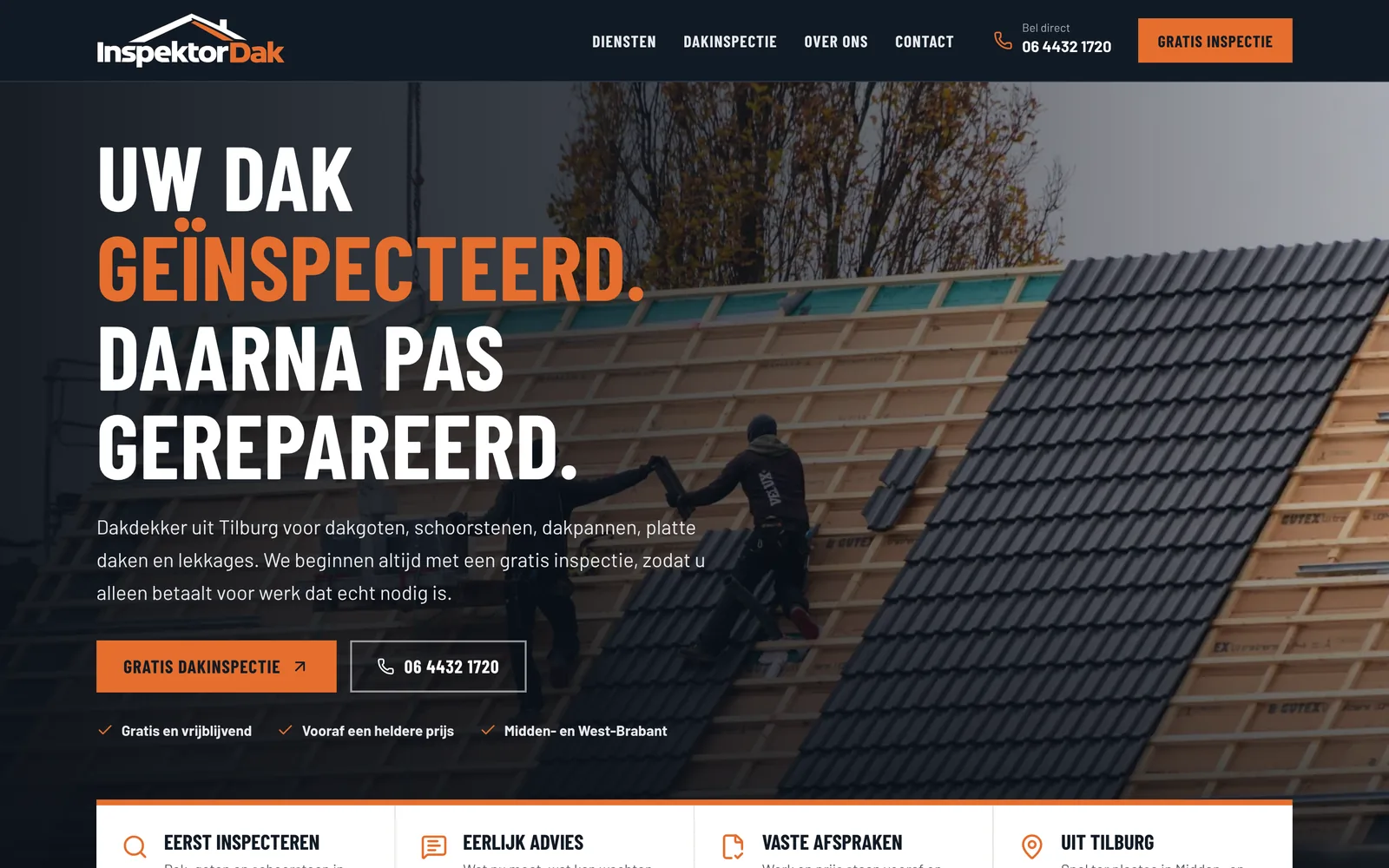
Screenshots
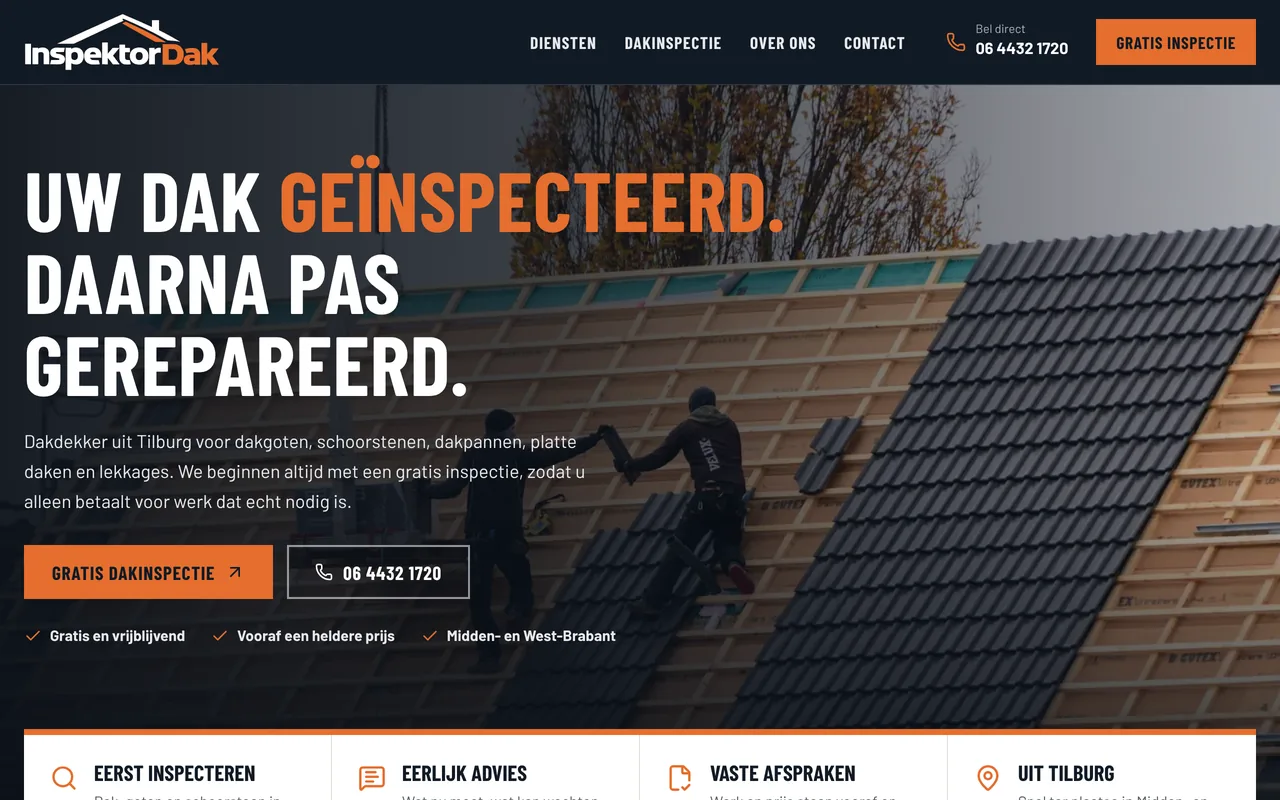
Captured from the InspektorDak website (in Dutch).
- Sector
- Roofing contractor
- Client home base
- Tilburg, as published on inspektordak.nl
- Client service area
- Brabant region
- Key feature
- Request for a free roof inspection or a quote
About InspektorDak
InspektorDak is a roofing contractor working from Tilburg across the Brabant region. The company focuses on gutters, chimneys, flat roofs with bitumen, roof tiles and roof leaks, and offers a free, no-obligation roof inspection.
Company details, services and the logo were supplied by the client. I converted the logo into a sharp vector version and derived a favicon, app icons and a social sharing image from it.
What the website had to do
Someone with a leak, an overflowing gutter or a loose roof tile wants to know quickly whether a roofer can fix it and how to get in touch. The website therefore had to explain each service and lead every visitor to one clear next step: the free roof inspection.
The website got a design of its own, not a variation on an earlier site, and a request without unnecessary steps. On request, there is no WhatsApp button and no photo upload in the form; calling, email and the online request are the routes to contact.
What was built
Every important button on the website leads to the request for a free roof inspection.
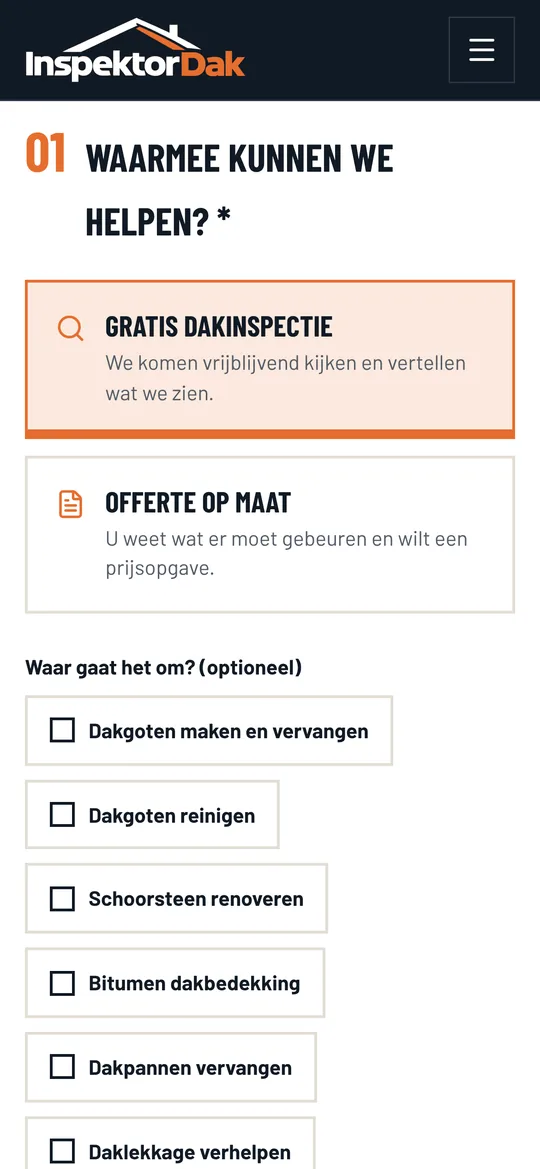
Request in three steps
The visitor first chooses between a free roof inspection and a quote, then describes the roof (services, roof type and urgency) and only enters contact details at the end. Coming from a service page, the matching service is already selected.
Seven service pages
Free roof inspection, installing and replacing gutters, gutter cleaning, chimney renovation, bitumen roofing, roof tile replacement and roof leaks. Each page has its own copy on warning signs, approach and frequently asked questions.
A design of its own in the brand colours
Navy and orange from the logo, bold Barlow Condensed headings, a photo opening of exactly one screen height with the request button in view, numbered service rows and dark sections with a top edge shaped like a roof ridge.
Map only after a click
On the contact page, Google Maps only loads when the visitor clicks “Toon kaart” (show map). Until then no Google scripts or cookies are loaded and the page stays light.
Secured request form
Input is validated in the browser and on the server. Single-use form tokens, an origin check, a honeypot and rate limits reduce spam. If sending fails, the visitor gets an email draft instead of a false confirmation.
Honest use of images
Until the company has its own project photos, the website uses freely licensed stock photos. They are never presented as work carried out by the company.
Site structure and search visibility
Every service has its own page with its own title and description. Twenty regional pages, from Tilburg and Breda to ’s-Hertogenbosch and Eindhoven, describe the neighbourhoods, accessibility and housing stock of each place, with sources for the local facts. No projects or references are claimed per place.
Structured data describes the company as a roofing contractor with its Chamber of Commerce number and service area, the services, frequently asked questions and breadcrumbs. The sitemap and canonical URLs are in place, and outdated place pages redirect to the service area overview.
- 7 service pages
- 20 regional pages with local context
- Request page for an inspection or a quote
- Sitemap, canonical URLs and breadcrumbs
- JSON-LD for roofing contractor, services and FAQs
Mobile use
On a phone, the opening with the request button fits the screen exactly. Besides the pages, the collapsible menu contains a button to call directly; on larger screens the phone number sits in the website header.
The frequently asked questions open one at a time, so a long list stays clear on a small screen.
Built with
- Next.js
- React
- TypeScript
- Custom CSS design
- JSON-LD structured data
This case study describes what was built. Figures on visitors, enquiries or search rankings are only published with measurement data and the client’s permission.